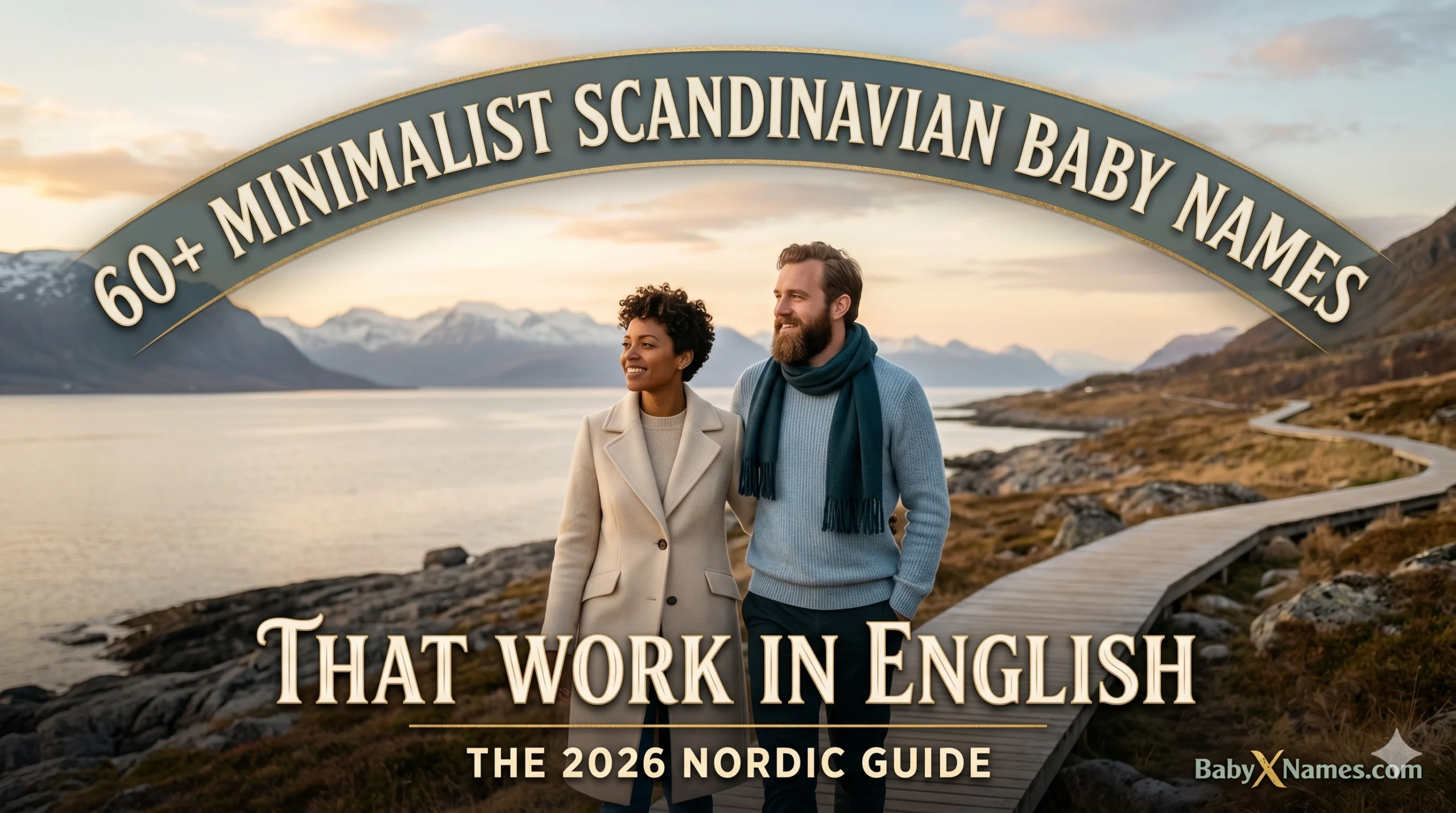
In the design world, Scandinavian style is defined by “Hygge”—a sense of cozy simplicity, clean lines, and intentionality. In 2026, this aesthetic has officially moved from our living rooms into our nurseries. For parents in the USA, Canada, the UK, and Australia, the appeal of minimalist Scandinavian baby names that work in English lies in their “Quiet Luxury.” These names are short, punchy, and modern, yet they are anchored by thousands of years of Norse history and mythology.
The “naming dilemma” in Tier 1 countries often revolves around finding a name that is unique enough to stand out but simple enough to never be misspelled or mispronounced. Scandinavian names provide the perfect solution. They offer a refreshing alternative to overused Western classics while maintaining a high-status, professional aura. In this high-authority guide, we explore the top Nordic names making waves in 2026, filtered specifically for their ease of use in English-speaking environments.
Why “Scandi-Minimalism” is the Top Naming Trend of 2026
The shift toward Nordic naming is a reaction to the “maximalist” trends of previous years. Parents are moving away from heavy, multi-syllabic names and embracing “Brevity with Depth.” A Scandinavian name often packs a significant meaning—like “Victory,” “Eternal,” or “Bear”—into just three or four letters.
Furthermore, the rise of “Nature-Lite” lifestyles in Canada and the USA has made names like Soren and Freja feel right at home. These names don’t just sound good; they carry a vibration of resilience and connection to the earth, which is a primary value for parents in 2026.
Minimalist Boy Names: Sharp, Strong, and English-Friendly
These names offer a masculine strength that works perfectly from the playground to the corporate boardroom, bridging the gap between Viking heritage and modern professionalism.
1. Aksel
- Origin: Scandinavian (form of Absalom)
- Meaning: “Father of peace.”
- Why it’s trending in 2026: While Axel (with an ‘x’) has been popular, the Aksel spelling is rising in the UK and Australia for its “Authentic-Minimalist” feel. It’s edgy but grounded.
2. Stellan
- Origin: Swedish
- Meaning: “Calm” or “Peaceful.”
- Why it’s trending in 2026: Stellan is the ultimate “Global Professional” choice. It’s easy for English speakers to pronounce but remains rare enough to feel distinguished in North America.
3. Magnus
- Origin: Old Norse/Latin
- Meaning: “Great” or “Mighty.”
- Why it’s trending in 2026: Magnus has long been a royal staple in Denmark and Norway. In 2026, it is being adopted by parents in the USA and Canada who want a “Power Name” that isn’t as aggressive as Hunter or Gunner.
4. Viggo
- Origin: Old Norse
- Meaning: “Battle” or “Fight.”
- Why it’s trending in 2026: Short, vowel-ending names are the #1 trend this year. Viggo is energetic, artistic, and undeniably cool, largely popularized by high-profile creative families.
Lyrical Girl Names: Airy, Simple, and Globally Chic
For girls, the focus is on “Melodic Brevity”—names that sound like a soft breeze but carry the weight of ancient queens and goddesses.
5. Freja
- Origin: Old Norse (Goddess of Love)
- Meaning: “Noble woman” or “Lady.”
- Why it’s trending in 2026: Whether spelled Freja or Freya, this name is a Top 10 powerhouse in the UK and Australia. It perfectly balances mythological elegance with a friendly, modern sound.
6. Alma
- Origin: Scandinavian/Latin
- Meaning: “Nurturing,” “Kind,” or “Soul.”
- Why it’s trending in 2026: Alma is currently the #1 “Crossover Classic.” It is a top choice in Sweden and Denmark and is rapidly rising in the USA for its “Quiet Luxury” appeal.
7. Astrid
- Origin: Old Norse
- Meaning: “Divinely beautiful” or “Godly strength.”
- Why it’s trending in 2026: Astrid is the quintessential “Academic-Chic” name. It sounds intelligent and established, making it a favorite for professional parents in London and Toronto.
8. Saga
- Origin: Old Norse (Goddess of Storytelling)
- Meaning: “Story,” “Tale,” or “Seeing one.”
- Why it’s trending in 2026: In a year where “Narrative” is everything, naming a daughter Saga is a bold, minimalist move. It is poetic, short, and carries an immense mythological aura.
💡 Pro-Tip for Parents
When choosing minimalist Scandinavian baby names that work in English, watch out for “The J Factor.” In Nordic languages, ‘J’ is often pronounced as a ‘Y’ (e.g., Freja is Fray-uh). If you want to avoid a lifetime of corrections in the USA or Australia, consider the English-friendly spelling (e.g., Freya) or embrace the original as a “Conversation Starter.”
The 2026 “Scandi-Nature” Shortlist
These names are directly inspired by the forests, fjords, and light of the North, fitting perfectly with the “Organic Minimalist” lifestyle.
- Birk: (Danish/Norwegian, “Birch tree”). A sturdy, 1-syllable nature name for boys.
- Eira: (Old Norse/Welsh, “Snow” or “Healing”). A shimmering, luminous choice for girls.
- Liva: (Danish, “Life” or “Protection”). A vibrant, modern alternative to the common Olivia.
- Finn: (Old Norse, “Fair” or “White”). A permanent global favorite that is short and powerful.
- Alva: (Swedish, “Elf” or “Magical being”). Whimsical, light, and perfectly minimalist.
2026 Naming Trend Prediction: The “Mono-Syllabic Nordic” Surge
By late 2026, we predict a massive shift toward “Nordic Word-Names.” Parents are moving away from traditional names and toward direct translations that function as names. Expect to see names like Storm, Sol (Sun), Bo (Inhabitant), and Gry (Dawn) dominating the charts. These names provide the ultimate minimalist profile—exactly one syllable, easy to spell, and packed with elemental meaning.
Also Check:- exwife age
Frequently Asked Questions (FAQ)
Are Scandinavian names hard for Americans to pronounce?
Most are very intuitive! Names like Leo, Erik, and Elsa have been integrated for decades. For rarer choices like Solveig or Thorbjorn, the pronunciation can be trickier, which is why we recommend “English-Friendly” versions like Soren or Torin.
Why is the “Minimalist” naming trend so strong in Australia and the UK?
Both countries have a deep appreciation for “Modern-Vintage” aesthetics. Scandinavian names provide that “Clean Slate” feeling while still offering a connection to the historical roots that European and Australian parents value.
Can these names work as gender-neutral options?
Many do! Names like Marte, Janne, and Finn are increasingly being used across the gender spectrum in 2026, fitting the global trend toward “Flexible Identity.”
Does the meaning of the name matter in Scandinavian culture?
Deeply. Historically, Nordic names were believed to bestow the qualities of the name (like strength or wisdom) upon the child. Choosing a name like Astrid (Divine Strength) is seen as a way of setting a high-intent foundation for a child’s life.
Final Thoughts: Simplicity is the Ultimate Sophistication
Selecting from this list of minimalist Scandinavian baby names that work in English is more than just a stylistic choice; it’s a commitment to a lifestyle of clarity and depth. By choosing a name that is short, meaningful, and globally wearable, you are giving your child an identity that is both effortless and enduring.
![Read more about the article 300+ Best Free Fire Name For Boys and Girls [2026]](https://babyxnames.com/wp-content/uploads/2026/02/Free-Fire-Name-For-Boys-and-Girls--300x169.jpg)