
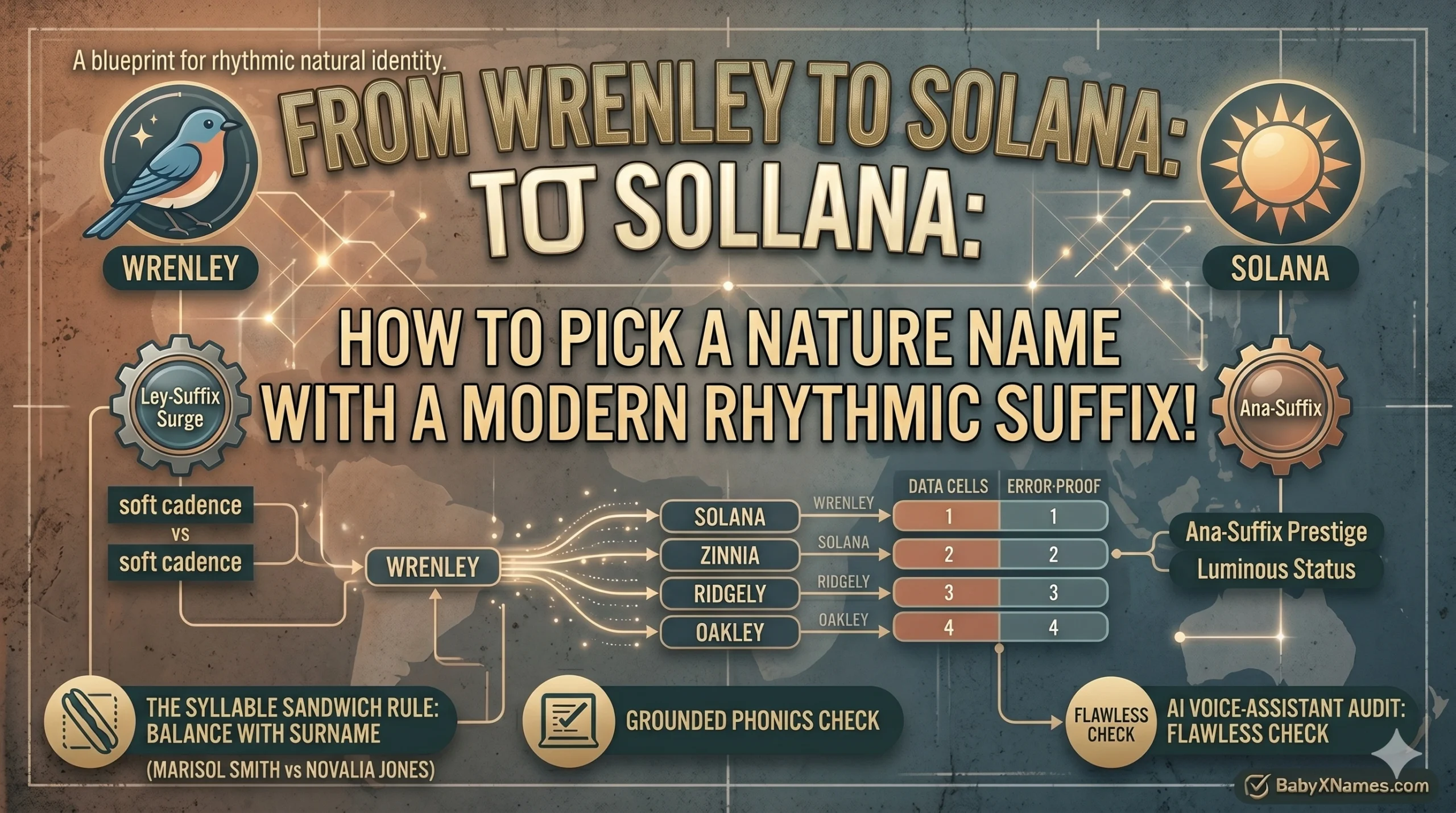
The natural world has always been a primary source of inspiration for parents, but the way we interpret “nature” is undergoing a radical transformation in 2026. While previous decades focused on literal, one-syllable nouns like Rose or Wren, modern parents in the USA, Canada, UK, and Australia are seeking something more lyrical. The “naming dilemma” today isn’t just about the meaning—it is about the phonetic “vibe.” Learning from Wrenley to Solana: how to pick a nature name with a modern rhythmic suffix is the key to finding a moniker that feels grounded in the earth but polished for a digital future.
A rhythmic suffix—such as -ly, -ia, -ana, or -ley—adds a melodic cadence to a raw nature word. This transformation turns a static noun into a dynamic, “high-status” name that flows beautifully across social media profiles and professional registries. In 2026, prestige is found in this hybridity: the strength of the natural world combined with the sophisticated rhythm of modern phonics.
The Rise of “Rhythmic Nature” Phonics
In the current landscape of “Clean Onomastics,” parents are moving away from creative spellings and toward creative structuring. By adding a suffix to a botanical or topographical root, you create a name that is both unique and easy to spell. This “Zero-Friction” approach ensures the name is phonetically intuitive for AI voice assistants while maintaining a distinctive edge.
The appeal of names like Wrenley or Solana lies in their “syllable balance.” They provide a rhythmic bridge between a short first name and a traditional last name, creating a high-status sound that suggests both creativity and establishment. This guide breaks down the most influential suffixes of 2026 and how to pair them with natural roots.
Top Rhythmic Nature Names for Girls (Melodic & Earthy)
These selections utilize popular suffixes to elevate botanical roots into sophisticated, 2026-ready identities.
- 1. Wrenley
- Origin: English.
- Meaning: Small songbird of the meadow.
- Why it’s trending in 2026: It is the quintessential example of the “Ley-Suffix” surge. It takes a sharp, one-syllable bird name and gives it a soft, approachable cadence.
- 2. Solana
- Origin: Spanish/Latin.
- Meaning: Sunshine or eastern wind.
- Why it’s trending in 2026: The “-ana” suffix is the ultimate status symbol for “Luminous” names this year. It feels international, executive, and bright.
- 3. Zinnia
- Origin: Latin/German.
- Meaning: Remembrance or the Zinnia flower.
- Why it’s trending in 2026: Ending in “-ia” provides a classic, sculptural beauty. It is the bold, modern successor to Lily or Rose.
- 4. Marisol
- Origin: Spanish.
- Meaning: Sea and sun.
- Why it’s trending in 2026: It uses a rhythmic internal structure rather than just a suffix. It is a “Global Crossover” favorite that works perfectly across Tier 1 borders.
- 5. Novalia
- Origin: Latin-based hybrid.
- Meaning: New meadow or new light.
- Why it’s trending in 2026: Part of the “Celestial Meadow” trend. It sounds established and prestigious while remaining statistically rare.
Top Rhythmic Nature Names for Boys (Strong & Lyrical)
For boys, rhythmic nature names prioritize architectural strength and “Grounded Phonics,” moving away from overly harsh or blunt sounds.
- 6. Ridgely
- Origin: English.
- Meaning: From the meadow at the ridge.
- Why it’s trending in 2026: It takes a rugged “Mineral Surge” root (Ridge) and softens it with a professional-sounding suffix, making it perfect for the “Global Executive” aesthetic.
- 7. Elio
- Origin: Italian/Greek.
- Meaning: Sun or sun god.
- Why it’s trending in 2026: The “-io” suffix is rising fast for boys. It is short, punchy, and carries a high-status, international flair.
- 8. Cassian
- Origin: Latin.
- Meaning: Hollow or cinnamon (wood).
- Why it’s trending in 2026: While an ancient name, its association with earth and spice makes it a favorite for parents seeking “Deep Rooted” prestige.
- 9. Oakley
- Origin: English.
- Meaning: From the oak tree field.
- Why it’s trending in 2026: It remains a staple of the “Ley-Trend.” It suggests strength and durability while maintaining a friendly, open cadence.
- 10. Lucian
- Origin: Latin.
- Meaning: Light or shining.
- Why it’s trending in 2026: Parents are ditching Luke for the rhythmic sophistication of Lucian. It fits the “Luminous” trend with an unshakeable, classic core.
Pro-Tip: The “Syllable Sandwich” Rule
When picking a nature name with a rhythmic suffix, consider your surname’s length. If you have a short, one-syllable last name (like Smith or Jones), a three-syllable rhythmic name like Solana or Novalia creates a high-status, melodic balance. For long surnames, a two-syllable name like Wrenley is usually the “Zero-Friction” sweet spot.
2026 Trend Prediction: The “Estate-Core” Suffix Surge
As we head into the latter half of 2026, we predict a move toward what we call “Estate-Core” suffixes—specifically -den, -ton, and -mont. Parents are looking for nature roots that sound like prestigious locations.
Expect to see names like Riverton, Lakemont, and Wilderden rising in suburban hubs near Toronto, London, and Melbourne. These names represent the intersection of “Mineral Strength” and “Ancestral Prestige,” providing a name that feels both outdoorsy and upper-class.
Frequently Asked Questions (FAQ)
What is a rhythmic suffix in baby naming?
A rhythmic suffix is a melodic ending—like -ley, -ana, -ia, or -io—added to a name’s root. In nature naming, it transforms a literal noun (Wren) into a more lyrical, stylized name (Wrenley).
Why are rhythmic nature names trending in 2026?
Parents are seeking a balance between the groundedness of nature and the professional polish of traditional names. Rhythmic suffixes make nature names sound more established and less “bohemian,” which is favored in Tier 1 professional circles.
Are these names easy for digital registries and AI?
Yes. Most rhythmic suffixes follow standard English phonetic paths. Because they avoid creative or “silent” spellings, they are “Zero-Friction” names that AI voice assistants and automated registries can easily process.
Can a rhythmic nature name be gender-neutral?
Absolutely. Many of the most popular rhythmic nature names, like Oakley, Riverly, or Sageley, work beautifully across the gender spectrum, fitting the 2026 trend for “Fluid Onomastics.”